 City Tours Florence
Home › Guides › When Is the Best Time to Visit Florence?
When Is the Best Time to Visit Florence?
The best time to visit Florence is late September through October, when average highs sit around the low 70s F, the summer crowds are gone and hotel rates ease. Spring, from April to early June, is the close second choice, with long museum days and festival season in full swing.
Quick answer The short answer on when to go
Late September through October is the best time to visit Florence, with highs in the low 70s F and fewer crowds after summer. May and June are warm and lively but busier and pricier. January and February are the cheapest months, with highs near 50°F and short lines.
Key takeaways
- Pair your month with one of the florence city tours to skip the worst lines.
- Book a Duomo first entry and dome climb if you travel in high season.
- In quiet months, a short Accademia Gallery David guided tour fits easily into a morning.
- First-timers can cover the essentials with Florence in a Day whatever the season.
What is the best month to go to Florence?
October is the single best month, with late September a very close second.
Most guides hedge. Here is a straight verdict, and one for each type of traveller.
The overall verdict
Late September through October combines ideal weather with fewer crowds, since the city empties out after summer and average highs sit in the low 70s F. Museums are busy but manageable, and evenings are still warm enough for open-air dining. If you want the classic Florence experience without sweltering heat, this is your window.
Best month by traveller type
No single month suits everyone, so pick the row that matches your trip.
For first-timers, go in late September or October. You get the best weather, fewer crowds and comfortable walking conditions. A Florence in a Day walking tour covers David, the cathedral and the city highlights in three hours.
For budget travellers, aim for August, December, January or February. Hotel rates drop and lines shrink in winter, when temperatures between the mid-30s and upper 50s keep tourists at a minimum.
For families, avoid April and May. Thousands of students arrive on school trips with free museum entrance in those months, so lines at the main museums can be longer than usual. June before the peak, or October, is easier with kids.
For art lovers and couples, April, May, September and October are the honeymooner favourites. May adds the Maggio Musicale festival, and spring is the only time the Iris garden opens, from the end of April to the end of May.
One timing tactic for every profile: the first Sunday of each month offers free admission to state-owned museums such as the Uffizi and Bargello, so plan around it, either to save money or to avoid it.
| Traveller | Best months | Why |
|---|---|---|
| First-timers | Late September, October | Ideal weather, fewer crowds |
| Budget | August, December, January, February | Lowest rates and shorter lines |
| Families | June, October | School-trip crowds in April and May are gone |
| Couples and honeymooners | April, May, September, October | Mild weather and the Iris garden in spring |
| Art lovers | First Sunday of any month | Free state museum entry at the Uffizi and Bargello |
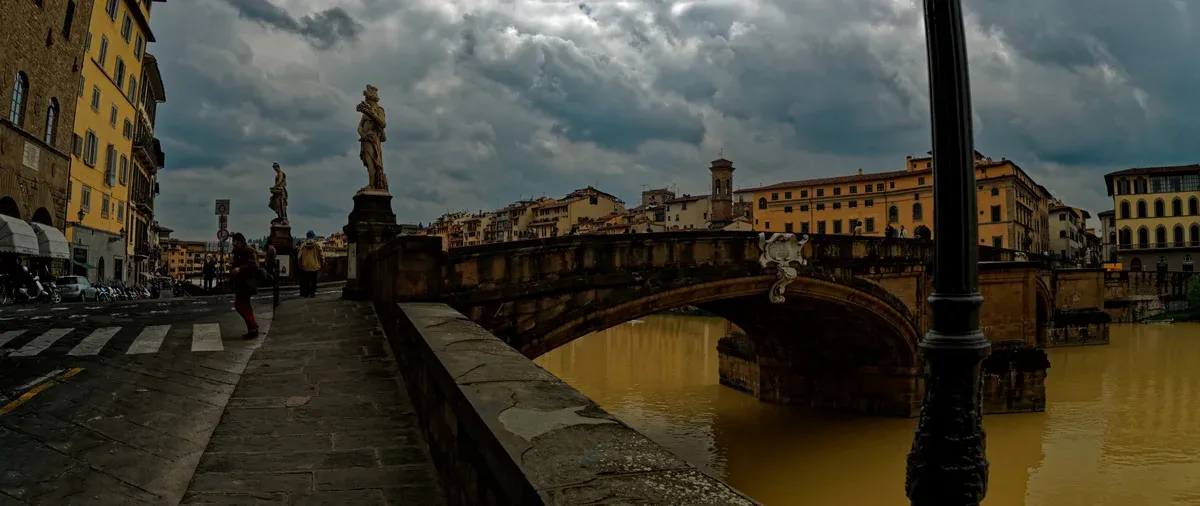
The Arno at Ponte Santa Trinita on an overcast day. Photo: Txllxt TxllxT, CC BY-SA 4.0, via Wikimedia Commons
What is the weather like in Florence month by month?
Florence runs from cold winters around 2-11°C to hot summers reaching 32°C, with rain most likely in autumn and winter.
January is the coldest month and July and August the hottest. Fall and winter can be rainy, while summer is very dry with almost no rain. Here is the whole year in one grid.
Month-by-month weather, crowds and prices
Average seasonal temperatures run 5-24°C in spring, 16-32°C in summer and 6-27°C in autumn. Winter sits between 40-55°F (4-13°C). Use the table to weigh warmth against crowds and cost.
| Month | Typical temperatures | Crowds | Prices | What's on |
|---|---|---|---|---|
| January | High 7°C (44°F), low 0°C (32°F) | Low | Low | Epiphany (Befana) at Piazza Duomo, Cavalcata dei Magi procession, live nativity outside the Duomo |
| February | High 10°C (50°F), low 2°C (36°F) | Low | Low | Quiet galleries, short lines |
| March | High 16°C (61°F), low 5°C (41°F), occasional showers | Rising | Lower until Easter | Florentine New Year on March 25th with markets, street food and parades |
| April | 45-65°F, more rain showers | Busy, with school trips | Deals possible, rising | Maggio Musicale Fiorentino begins, Scoppio del Carro fireworks on Easter Sunday |
| May | Spring, up to 24°C | Busy, with school trips | Most expensive window from Easter | Maggio Musicale, Iris garden open |
| June | Summer, up to 32°C | Very busy | High | Fochi di San Giovanni fireworks, Calcio in Costume, historic soccer in Piazza Santa Croce |
| July | Hottest, up to 32°C | Busiest season | High | Peak rates until September |
| August | Hot, up to 32°C | Busy but some locals away | Better for budgets | Some shops and restaurants close for a few weeks |
| September | Autumn, up to 27°C | Easing | High early, easing | Warm evenings, harvest season begins |
| October | Highs in the low 70s F | Falling | Easing | Grape harvest in Chianti, chestnut and truffle festivals |
| November | Autumn, down to 6°C | Low | Low | Rainy spells, food festivals |
| December | Winter, 4-13°C | Low outside holidays | Low | Christmas markets in Piazza Santa Croce, Florence Biennale |
When is the high season in Florence?
High season runs from Easter to the beginning of July, which is also the most expensive time of the year.
Crowds follow the seasons closely, and the start of high season depends on when Easter falls.
Crowd levels by season
Until Easter it is still low season, so prices are generally lower. From Easter to early July, airfares and hotel rates peak, and they stay high until September. Summer is the busiest season, except in August when most Italians go on vacation and the city thins out slightly.
In April and May, watch for school trips. Thousands of students arrive with free museum entrance, so lines at the main museums can be longer than usual. October is the fall sweet spot, when the city empties out after summer.
If you must travel in high season, book timed entry. The Uffizi Gallery small-group guided tour with ticket and the Duomo first entry with dome climb both get you past the queue.
What is the cheapest time to go to Florence?
The cheapest months are August, December, January and February.
Budget months overlap with the quietest ones, which makes winter a strong value play.
Low season value
In winter, temperatures between the mid-30s and upper 50s keep tourists at a minimum, with shorter lines and reduced hotel rates. In August, the budget advantage returns even though the weather is hot, because locals leave.
Low season has a food bonus too. You can easily get tables at trattorias that are booked or closed all summer, such as Da Camillo and Trattoria Sostanza.
Another saving: the first Sunday of each month offers free admission to state-owned museums such as the Uffizi and Bargello. If you plan a winter trip, time it around that Sunday.
What is the rainy season in Florence, Italy?
Fall and winter are the rainy periods in Florence, while summer is very dry with almost no rain.
Rain shapes your packing more than your itinerary, since wet days are rarely washouts.
Rain by season
Fall and winter can be rainy, and spring brings showers too. April has a higher chance of rain showers, and March sees occasional showers with its 16°C highs. July and August are the driest months.
Practically, pack a compact rain layer from October through April. On wet days, museums are your friend, and a short indoor visit like the one-hour Accademia Gallery David guided tour with timed entry fits neatly between showers.
How many days do I need in Florence?
Two to three days cover the main sights, and a quieter month lets a shorter trip feel longer.
Trip length and timing work together, because lines eat hours in high season.
Matching trip length to season
In low season, shorter lines mean a short trip goes further. On two winter days you can see David and the Uffizi without the summer queues, and even book tables at famous trattorias on the spot.
In high season, add a day. Queues at the main museums run longer in April and May, when thousands of students on school trips arrive with free entrance. A compact plan helps there: Florence in a Day bundles David, the cathedral and the city highlights into three hours, and Duomo First Entry, Key Holder & Dome Climb gets you up the dome before the general line forms.
Wanting more than the city? Late September and October pair well with the countryside, since autumn brings Chianti wine country into harvest along with chestnut and truffle festivals in Tuscany.
What is the quietest time to visit Florence?
January and February are the quietest months, with November a close runner-up.
Cold weather keeps the crowds away, and that is exactly the appeal.
What quiet months feel like
In winter, temperatures between the mid-30s and upper 50s keep tourists at a minimum, so lines shrink and hotel rates drop. January is the coldest month, with a daytime high of 7°C (44°F) and a low of 0°C (32°F), yet it has real charm: the Epiphany is celebrated at Piazza Duomo, with the Cavalcata dei Magi procession and a live nativity outside the Duomo.
Quiet does not mean empty indoors. The big galleries still draw visitors, so a timed Uffizi Gallery small-group guided tour with ticket is still worth booking.
Which museums should I book, and what are the hours?
Book the Accademia, Uffizi and Duomo ahead in any season, and plan around Monday closures.
Hours barely change by month, but closures do, and they catch travellers out.
Hours and closing days to plan around
The Uffizi opens Tuesday to Sunday from 8.15 am to 6.30 pm, with the ticket office closing at 5.30 pm, and it shuts on Mondays as well as 1 January and 25 December. The Accademia runs 8:15 am to 6:50 pm with last admission at 6:10 pm, also closed every Monday. The Pitti Palace keeps the same Tuesday-to-Sunday pattern, 8.15 am to 6.30 pm.
Boboli Gardens open from 8.15 am, closing between 4.30 pm in the winter months and 7.10 pm in summer, and they close on the first and last Monday of each month.
For tickets, the official Accademia site lists a combined Accademia plus Bargello 48-hour ticket at EUR 26 and a six-museum 72-hour ticket at EUR 38. If you would rather have a guide handle entry and context, the Accademia Gallery David guided tour with timed entry costs $46 per person for one hour, and the Uffizi small-group guided tour with ticket is $71 per person for 1.5 hours.
A timing note for any month: the first Sunday of the month is free at state-owned museums such as the Uffizi and Bargello, so expect extra crowds there that day.
Sources: Uffizi Galleries, Galleria dell'Accademia.
Tours That Fit
Whatever month you pick, these cover the essentials.
 from $109
Editor's pick
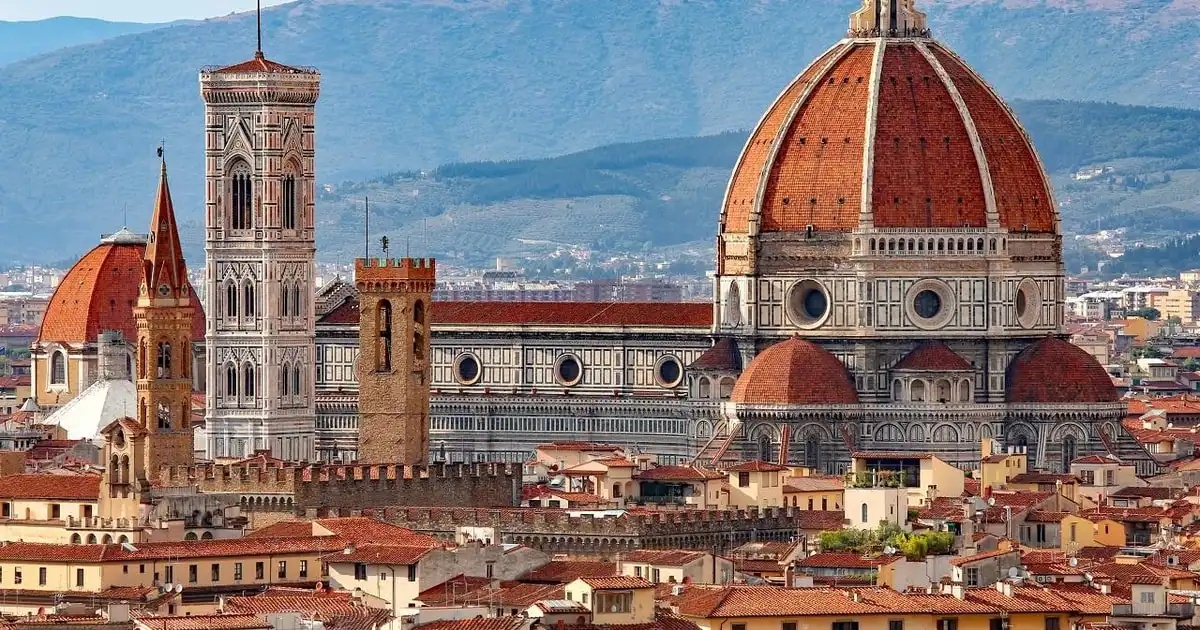
Florence in a Day: David, Cathedral & City Highlights Guided Walking Tour
One ticketed morning covers David inside the Accademia plus Duomo complex entry, then walks the centre to Ponte Vecchio in three hours.
Check Availability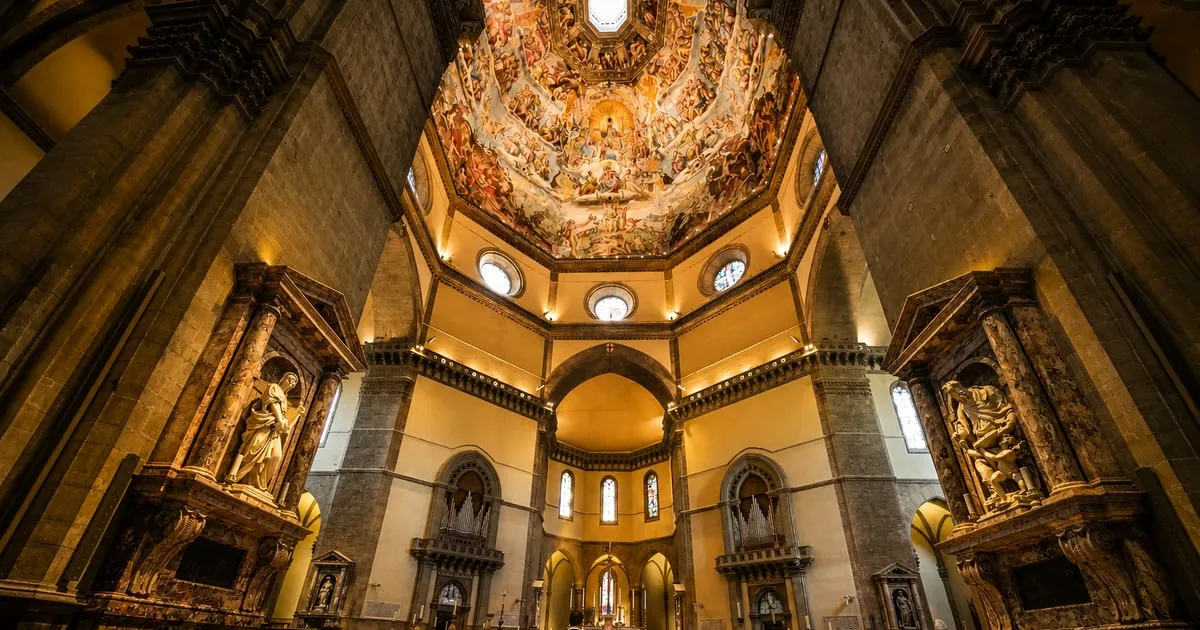 from $176
Early access
Duomo First Entry, Key Holder & Dome Climb
First entry inside the Duomo with the Key Holder before opening, plus the Dome climb ahead of the crowds.
Check Availability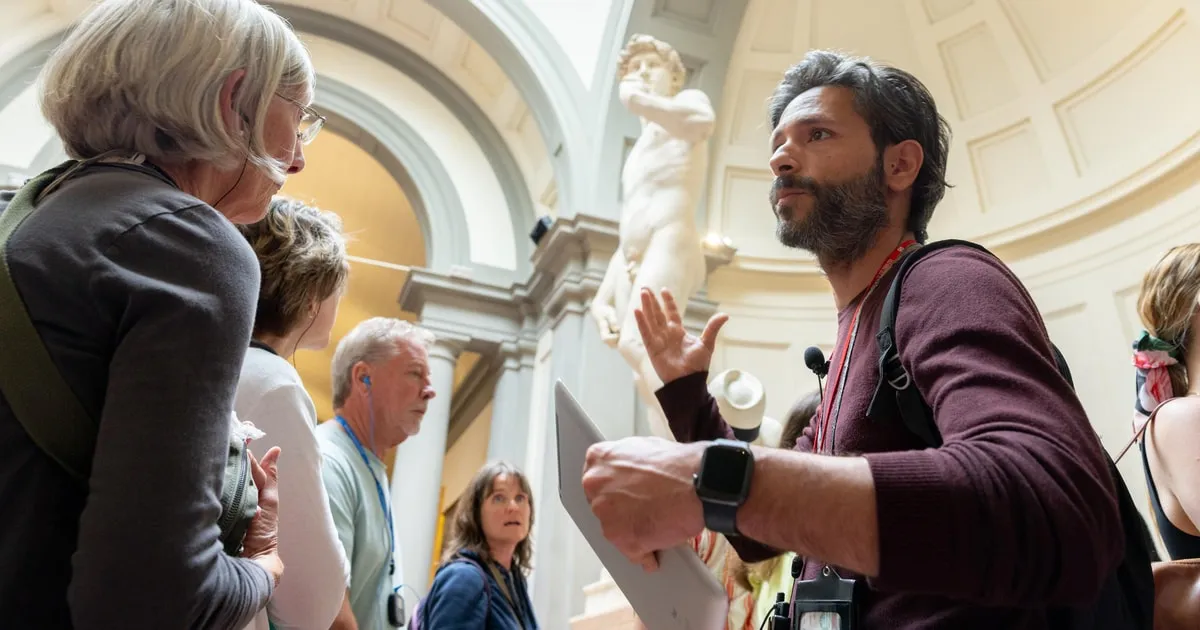 from $46
Accademia Gallery David Guided Tour & Timed Entry
A one-hour skip-the-line Accademia tour with a reserved timed-entry ticket, headset and live guide, from $46, with time to stay on after.
Check Availability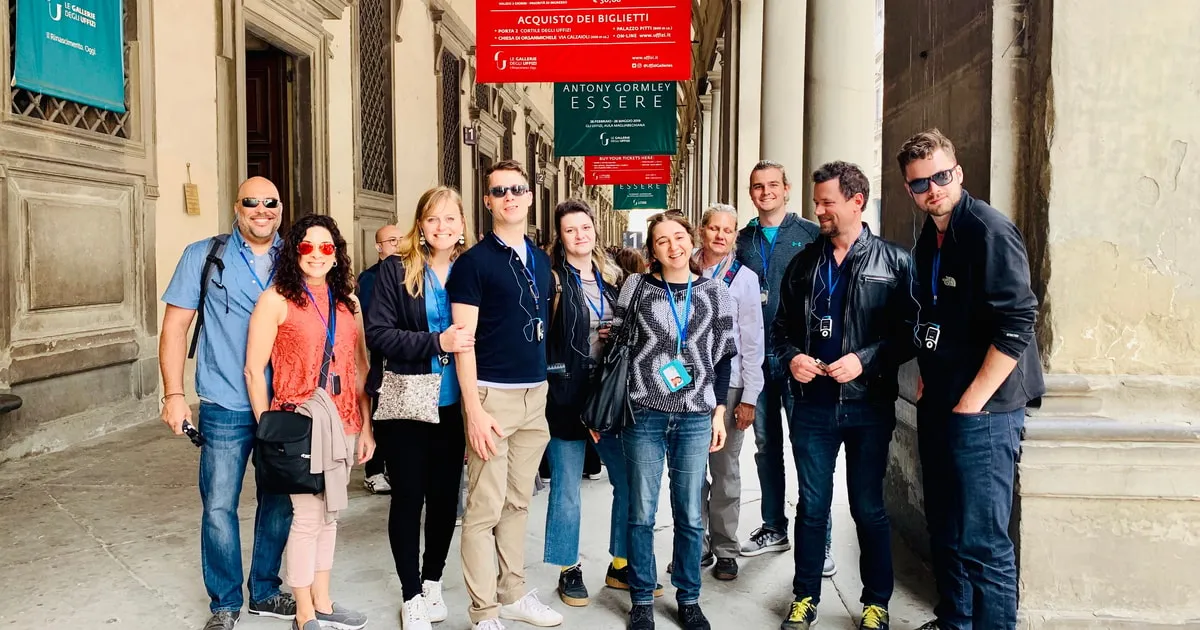 from $71
Uffizi Gallery Small-Group Guided Tour with Ticket
Small-group Uffizi visit with priority entry ticket, headsets and a 1.5 hour guided tour included in the price.
Check AvailabilityWhen is the best time to visit Florence and Tuscany together?
Late September and October work best for both, thanks to the Tuscan grape harvest and food festivals.
If your trip stretches beyond the city walls, let the harvest calendar decide.
Autumn in the countryside
Autumn brings Chianti wine tours during Tuscany's grape harvest season, plus chestnut and truffle festivals across the region. The city pairs well with it, since October highs stay in the low 70s F and the crowds thin after summer.
Spring is the other good joint window. April and May bring the Maggio Musicale Fiorentino festival, and the Iris garden in Florence opens from the end of April to the end of May. In town, arriving from the airport is simple in any season, since Florence airport sits about 5 km from the city centre and tram T2 connects Santa Maria Novella station to the airport and Piazza San Marco, running about every 5 minutes.
Is March a good time to visit Florence?
Yes, March is a good time, with mild 16°C days and prices that stay low until Easter.
March sits in the shoulder season, and that shapes both costs and crowds.
What March gives you
March has a typical daytime high of 16°C (61°F) and lows of 5°C (41°F), with occasional showers. Until Easter it is still low season, so prices are generally lower, and the high season start depends on when Easter falls that year.
The month also has its own celebration. March 25th is the traditional Florentine New Year, marked with markets, street food and historical parades. Pack layers for the cool evenings and a rain layer for the showers.
Frequently Asked Questions
What is the best month to go to Florence?
October, with late September close behind. Average highs sit in the low 70s F, the city empties out after summer, and evenings stay mild. See the full verdict in our guide to florence city tours to match your month with a timed tour.
How many days do I need in Florence?
Two to three days cover the highlights if you travel in a quiet month, since shorter lines save hours. In high season, add a day for queues, or use a three-hour highlights walking tour to compress the schedule.
What is the rainy season in Florence, Italy?
Fall and winter can be rainy, while summer is very dry with almost no rain. April also brings a higher chance of showers, so carry a rain layer from autumn through spring.
What is the cheapest time to go to Florence?
August, December, January and February are the best months for budget travellers, with reduced hotel rates and shorter lines in winter. The first Sunday of each month also brings free entry to state museums such as the Uffizi.
Is October a good time to visit Florence?
October is arguably the best month of all. It is the fall sweet spot, with average highs in the low 70s F, fewer crowds after summer and the Chianti harvest in the countryside nearby.
Best time to visit Florence in September?
Go in the second half of the month. Early September still carries peak rates and summer crowds, while late September offers ideal weather with fewer people and the start of harvest season.
What is the best time to visit Florence with kids?
June or October. April and May bring thousands of students on school trips with free museum entrance, so lines at the main museums run longer than usual, and summer highs near 32°C are hard on small children.
What is the best time to visit Florence for couples?
April, May, September and October are the honeymooner favourites. Spring adds the Iris garden, open from the end of April to the end of May, and autumn brings mild evenings for open-air dining.
More Guides
- Florence Bike Tour: City Ride or E-Bike to Piazzale Michelangelo
Compare Florence bike tours in 2027: a 2 hour e-bike climb to Piazzale Michelangelo from $33 or a 3 hour city ride. Book with free cancellation.
- Florence Duomo Tour: Cathedral and Dome Climb Options
Compare Florence Duomo tours in 2027: from a 30 minute cathedral visit to a 2 hour dome climb of 463 steps. Pick the right one and book.
- Florence Food Tour: Street Food or Central Market
Florence food tours in 2027: a 2.5-hour street food walk or a 3-hour Central Market tour with wine. See which suits you and check dates.